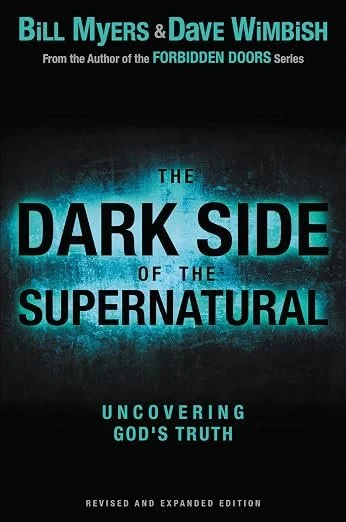
Book Review: “The Dark Side of the Supernatural” by Bill Myers & David Wimbish
As I prepare to begin a short topical sermon series on spiritual warfare (“Holy War,” starting Sept. 20), I have been reading various books and articles on the topic. It has always been my opinion that the reformed Presbyterian tradition could stand to give a little more attention to the question of demonic activity in the world. When this topic is treated, it is mostly expressed as a systematic theology of Satan and angels, with practical applications from Ephesians 6. Of course this is totally legitimate and necessary, but is there anything more to say about the existence and activity of demonic spirits and the reality of the supernatural dark side?
That’s what The Dark Side of the Supernatural attempts to explore. It covers about every topic you can imagine in this realm – demons, Satanism, UFOs, ghosts, near death experiences, Wicca, witchcraft, channeling, vampires, automatic writing, astrology, even astral projection. These are all fascinating topics, but the fact that this book is written for teenagers is both its strength and weakness – any young person can easily follow the prose and will be appropriately warned about experimenting in these areas, but the treatment of all these issues is so brief that you end up not learning very much.
Very often the authors will tell us that demonic spirits tend to communicate a common message – that we are all gods, that we should unlock the power within us, and that we should not worship Jesus as God. Of course this should make any Christian concerned, but the book never explains how they have received or discovered these messages. Did these messages come directly from these spirits? Did they read these statements in a book? Did a demon-possessed person tell them these things? For instance, the authors say "space aliens often urge us earthlings to open our hearts to the universe through meditation and other mystic practices" (p.70). OK, that’s definitely not good, but what is your source? How do we know this? No citation is given.
In another place (p.39-41), the authors share a story where they were seeking to exercise multiple demons from an individual. On one evening, this person called the author for help, but the author was not able to go to the demon-possessed person at that time, so over the phone he simply commanded the demon inhabiting the person not to leave the property until 3 pm the following afternoon. Because of the power of Jesus' name, the book claims, the person was consequently unable to physically leave the property.
My question – if the demon was so submissive to stay put, why not just command the demon to come out of the person immediately? Not sure why that would need to be delayed to the next day.
I don't mean to sound cynical, because of course I do believe in the existence and activity of demonic spirits, and I also believe in the supreme power of Jesus’ name. What does James 4:7 say? “Resist the devil, and he will flee from you.” We will explore this in more detail in the sermon series. But there are some stories in this book that created more questions for me than answers.
Even with that critique, I would not discourage parents from recommending this book to their teenage children, especially if those children are beginning to show interest in the occult or witchcraft or Satanism. The book is theologically sound (as far as it goes), frequently gives the Gospel, and calls for a response of faith. Its greatest strength is that it covers a wide variety of topics connected to the dark side of the supernatural, and is clear in articulating the dangers involved. Just be prepared, parents, to sit down and talk with your kids afterward about the contents of the book.
