
Book Review: “Land of Hope” by Wilfred McClay
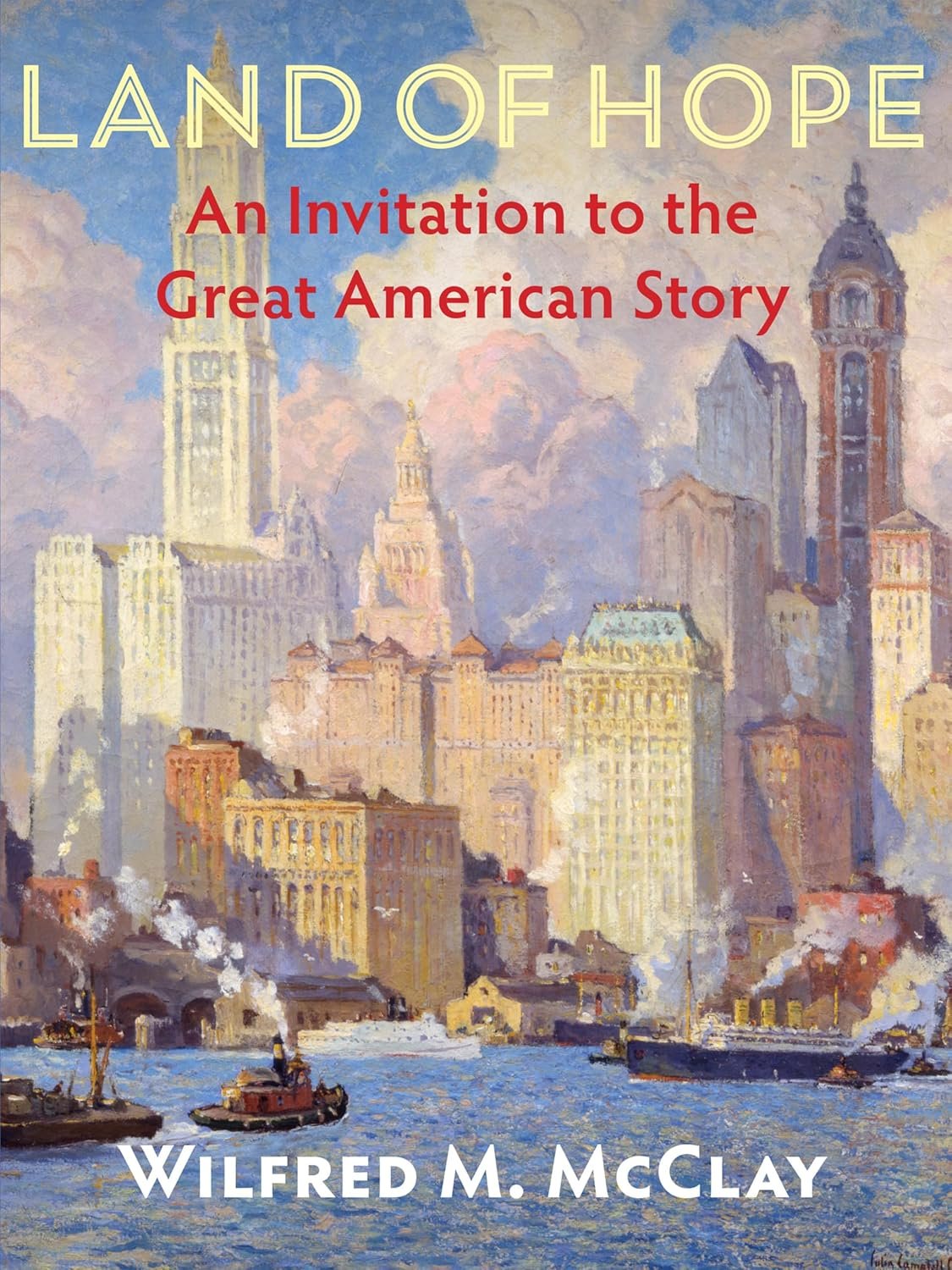
“The farther backward you can look, the farther forward you are likely to see,” said the great British leader Winston Churchill. In other words, the better you know your history, the more likely you will be ready for the future. In our current internet age of rapidly changing information, where last week’s news can sometimes seem like a distant forgotten age, it might be more important than ever for Christians to apply themselves to the study of history.
By “history,” I certainly mean to include church history (in fact, let me take this opportunity to mention an excellent five-volume set on church history called 2000 Years of Christ’s Power by Nick Needham that is highly recommended). But since we are celebrating the 250th birthday of our nation this month, I would suggest it is also a worthy endeavor to learn about American history. And I’m not sure there is a better place to start than with Land of Hope by Wilfred McClay, who is a professor of classical history and western civilization at Hillsdale College in Michigan.
There are at least three big advantages to McClay’s book. First, this is a broad overview of American history. Most often, history books tend to zero in on epic moments from the past, such as the Civil War or World War II, which certainly are important and valuable studies, but sometimes those books can ignore the factors that led up to the big events, as well as the aftereffects that occurred decades into the future. As McClay states, “History always begins in the middle of things.” In Land of Hope, you get the whole sweep of American history, from the first settlers on the continent to the election of Donald Trump to the presidency in 2016, along with the intermediate events that connect the dots.
The second advantage is that McClay’s account of our nation is not tainted with cynicism or protest. He is not setting out to deconstruct the American ideal, even though he warns us not to be surprised that “many of our heroes turn out to be deeply flawed human beings.” To be surprised that some founding fathers owned slaves, for instance, is “naivety in deep disguise." As the title of the book suggests, America is a place where you don’t have to settle for the status quo. McClay tells us that his aim is to “remind us of how remarkable were the achievements of those who came before us, how much we are indebted to them.”
The third advantage of the book (actually there are more benefits than just these three), is that it not only tells us the American story, but it also provides instruction along the way for how to assess and understand history as a discipline. For instance, we are all tempted to think that the latest controversy, either in the church or in the world, is of monumental significance, but the passing of time tends to sift out the trivial. “The events of the recent past have the advantage of being fresh in our minds, but part of the discipline of thinking historically is developing the ability to be skeptical of what we think we see plainly before our eyes and of what ‘everyone is saying’ in the present moment . . . We only rarely have the power to grasp the meaning of events as they are occurring.” (p.408). Which is why we should read history.
McClay concludes with a few exhortations for the reader, which every citizen, and every Christian, should take seriously. He urges us to consider the “importance of cultivating virtue, both civic and individual, as an essential precondition for the self-governing life.” This is what the church is uniquely equipped to provide as together we proclaim the hope of the Gospel, and teach Americans how to obey all that Jesus has commanded us, for our sakes, and for the sake of the nation.
