
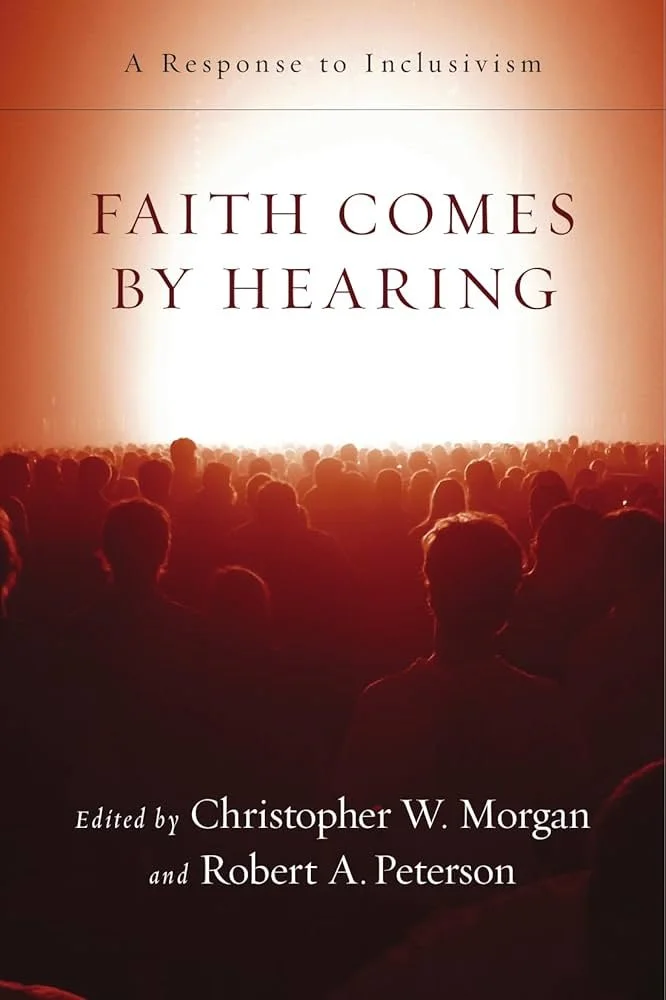
“But what about those who have never heard the Gospel?” There it is — one of the most commonly asked questions about the Christian faith, and one that can be a stumbling block for some considering the claims of the Gospel. If we face the question honestly, the implications are indeed troubling — the fact is that there are millions of people who live and die without ever sitting under a clear declaration of salvation in Jesus Christ. Are they consigned to hell? Or maybe there is a way they can get to heaven apart from Christ?
That’s the question that “Faith Comes By Hearing” addresses. A number of authors contribute to the volume, edited by Christopher Morgan and Robert Peterson, one of my former professors at Covenant Seminary in St. Louis. The book considers questions such as the sufficiency or insufficiency of general revelation (the knowledge of God humans gain from the created order); whether “holy pagans” such as Cornelius in Acts 10 were saved by faith in Christ or not; whether people can be saved through non-Christian “secular” religions; and what exactly is the nature of God’s redemptive zeal for the world.
The ongoing discussion throughout the book revolves around some key terms: pluralism, which is the view that all religions lead to God; exclusivism, which is the view that Jesus is the only Savior of the world and that one must believe in this Jesus as he is proclaimed in special revelation in order to be saved; and inclusivism, which is the view that Jesus is indeed the only savior of the world, but that one does not have to consciously believe in Jesus to be saved. It “maintains that unsaved persons can be saved by Jesus without hearing his name in this life.” (p.13).
Those raised in a traditional evangelical environment might be surprised to learn that the inclusivist view even exists, but they might also be surprised to hear inclusivist arguments that are more plausible than they imagined (after all, weren’t Old Testament saints like Abraham and Moses saved without hearing the name of Jesus?).
But just so you know, this book comes down firmly on the exclusivist position. Paul did write in Romans 10:14, “How are they to believe in him of whom they have never heard? And how are they to hear without someone preaching.” So the editors conclude, “The best way to help the unevangelized is not to become more optimistic about their eternal destiny apart from the Gospel. Rather, it is to allow our understanding of God and his word to generate a greater burden for the unevangelized and to pray, give and go to make sure that they hear the Gospel.” (p. 253). It is hard to read this book and not come away with an increased fervor for the importance of missions.
There are many arguments back and forth that should be considered before arriving at the exclusivist conviction, and this book covers them all in a careful, thorough and Biblical way.
