
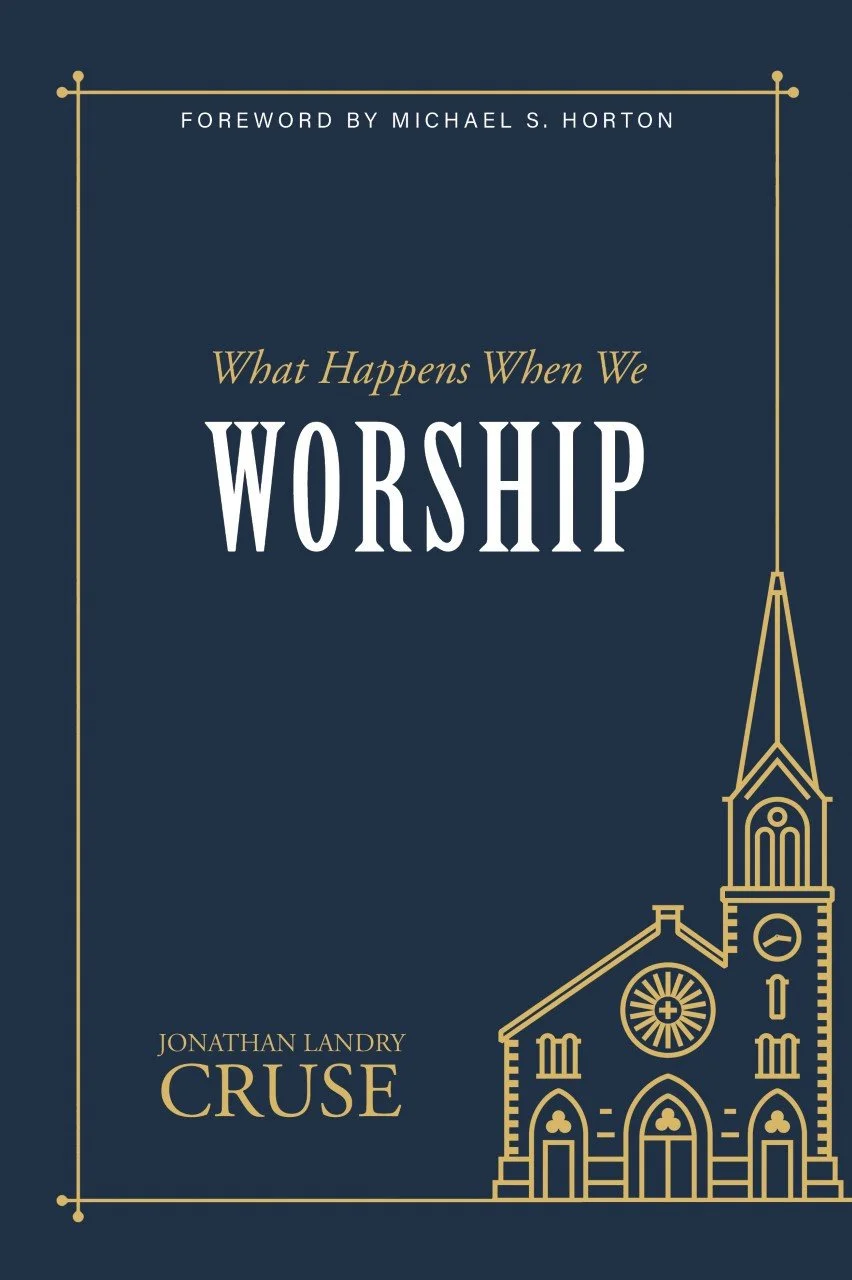
Book Review: “What Happens When We Worship,” Jonathan Landry Cruse
The one thing that surprises me the most when I have conversations with professed Christians is the high number of them who see Sunday morning worship as an optional spiritual activity. Some say they haven't found a church yet; others are content to watch services online; and some are convinced that corporate worship simply isn't necessary at all.
This book by Jonathan Cruse is an excellent primer on the importance of Sunday morning corporate worship, but also about the distinctives of reformed worship in particular.
The first half of the book explains the theology of worship, making the argument that it is the most important thing we will ever do. Some Christians seem content to worship God in the "small moments of every day," apart from Sunday morning, but Cruse clarifies that God "does not promise to meet with people everywhere. He doesn't take appointments at any place we would choose. You might run into your doctor at the grocery store, but that doesn't mean she will give you an exam right there and then! For that, you make an appointment at the office. So too, God's primary method is to meet with his people at his house – at church!" (p.38). How presumptuous of us to suggest that we can meet God on our terms, not his.
Cruse goes on to confront another common assumption which is that God doesn't care HOW we worship, only THAT we worship. But in the reformed tradition there is something called the regulative principle, which tells us we can only worship according to what the Bible prescribes. The worship service, in other words, is not an opportunity for us to flex our creative muscles in order to develop something more interesting or stimulating. As Calvin wrote, "when we are left at liberty, all we are able to do is go astray." Therefore, the Lord has seen fit to "strictly enjoin what he wishes us to do, and at once reject all human devices which are at variance with his command." (p.63).
In the second half of the book, Cruse explains the various elements of a reformed worship service: the call to worship, the greeting, confession of sin, assurance of pardon, the preaching of the Word, the Lord's supper, baptism, singing and prayer.
Perhaps one of the most startling of Cruse's claims is that the ordinary Sunday worship service is actually not intended to be "epic or awesome" (p.164). Pastors should not feel the pressure to provide breathtaking experiences on Sunday mornings, and worshipers should not go away disappointed if they weren't blown away by something stunning. Christian worship should actually be rather simple, ordinary and routine. Worship is not "flashy or visibly powerful but instead so simple that it appears to be inconsequential." (p.167). This is not to say that nothing happens in worship; quite to the contrary, corporate worship is the "primary arena of sanctification in the Christian life." God is pleased to transform us every Sunday morning, so long as we do things his way, not our way.
If you’ve ever wondered why it’s important to “go to church” on Sundays, or if you have ever wondered why we do things the way we do at New Life — that is, no altar calls, a fixed order, a good amount of repetition and no fog machines — this is a book you should read.
