What Are Your Reading Plans for 2026?
As we reach the end of another year, it’s a good time to start thinking about your reading plans for 2026. How much of the Bible will you plan to read? What books will you read? And what plan will you set forth to help you actually accomplish what you want to do?
The reading priority for every Christian, of course, should be consumption of the Bible, God’s holy word, and the means by which He sanctifies his people. While reading the entire Bible throughout the year is a valuable exercise, and highly encouraged, not every believer has the aptitude or available time to make it happen. So it’s OK if you don’t do this. But there are other options. You can plan to read through just the Old Testament in 2026, and the New Testament in 2027. You will be surprised how quickly those two years will rush by, and by the end of 2027, you will have read the entire Bible. You can do it! There is a web site called the Bible Reading Plan Generator that allows you to input the amount of Bible you want to read in a year, and it will prepare a daily reading plan for you to follow throughout the year. Various additional settings are available as well, such as choosing a specific day off during the week.
Another option is to engage in a slow, thorough and in-depth study of a single Bible book, preferably one with which you are largely unfamiliar, and with the aid of a commentary. How about the book of Jeremiah, with Phil Ryken’s commentary from Crossway at your side? How about the book of Romans with the guidance of John Stott’s IVP commentary? Perhaps you could read carefully through the Psalms with the help of James Boice’s three-volume commentary set on Baker? Or, if you need something more brief, consider working through one of Paul’s epistles and use the very concise “Let’s Study . . .” commentaries from Banner of Truth. With a single book of the Bible, don't worry about a schedule; just take your time and try to squeeze everything you can out of these Spirit-inspired books.
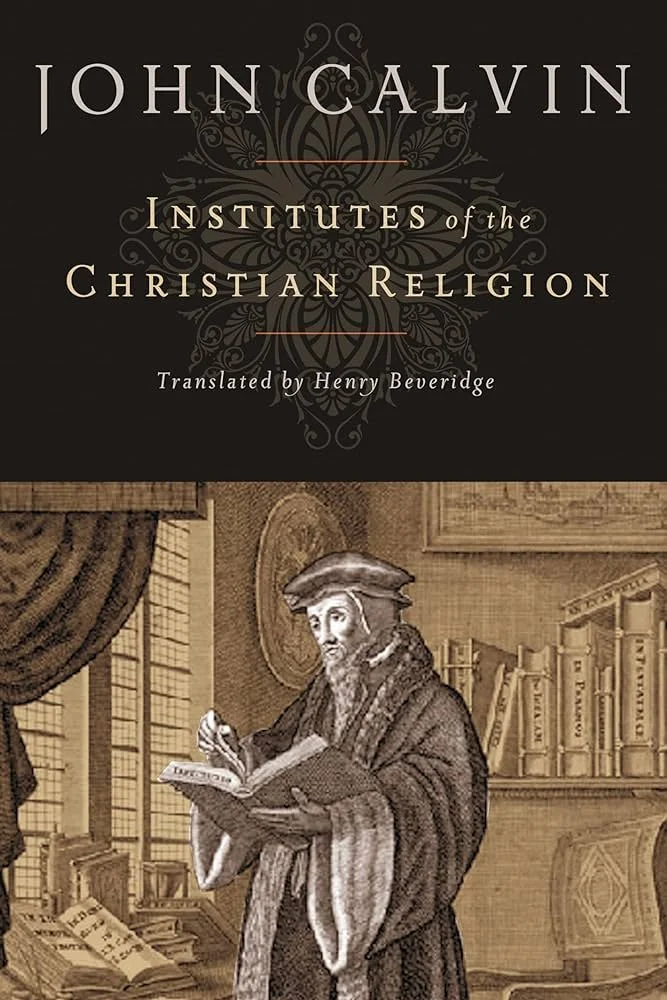
Once you get your Bible reading plan established, you might also want to consider what theological or devotional reading you’d like to pursue. My suggestion is that you aim high — that is, don’t settle for the latest Christian best seller, but consider something that will present a challenge to your heart and mind. How about John Calvin’s Institutes of the Christian Religion, or one of Joel Beeke’s recent volumes of Reformed Systematic Theology, or Herman Bavinck’s beautiful Wonderful Works of God, or John Frame’s Doctrine of the Christian Life? These are big books, but if you commit yourself to reading just three or four pages a day, you will be astonished at how much you can accomplish.
Whenever one pursues a reading plan like I am suggesting, there will inevitably be setbacks — you get sick, or you enter into an unexpectedly busy season, or a major crisis descends upon you, and you realize you are way behind on your reading plan. What do you do? First thing to consider — don’t quit. This will be the great temptation, and it will be enormously appealing. To get back on track, don’t try to regain all lost ground at once. Try adding just one Bible chapter to your daily assignment until you catch up, or with your theological reading, commit to reading five pages a day instead of three, just for a time, until you get back on schedule.
Also, with regard to theological reading, keep in mind that it’s no sin to not finish a book you start. If you are not connecting with the book, or you are finding it too incomprehensible, it’s OK to set it aside and try something different. Just don’t give up on some kind of reading goal, because reading even a small amount is better than not reading at all.
Happy reading to you and your’s in 2026 . . .
